
The Government of the Northwest Territories is hoping to turn the Yellowknife Airport into a self-sustaining entity that will ultimately become more of an economic driver in the NWT.
But it will come at a cost to passengers.
RELATED: ‘Not an austerity budget’: McLeod delivers first NWT budget
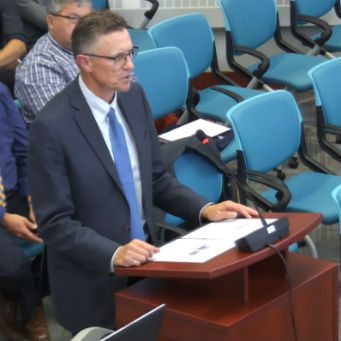
Russell Neudorf, deputy minister of the territorial government’s department of transportation, spoke to city councillors on Monday about enhancing the airport’s profile in the city.
Approximately 50,000 flights and 500,000 passengers pass through the Yellowknife Airport every year. The airport also directly employs 1,000 people.
Currently, the facility is anything but a money-maker, with the GNWT providing millions of dollars a year to cover operations costs.
“The airport itself costs about $9 million a year to operate … and we generate about $5 million a year in revenues,” said Neudorf.
“We are asking for it to become financially self-sufficient. Really, at the end of the day, we want to take the Yellowknife Airport and have it become more of an economic opportunity than it is right now.”
Under the purview of the department of transportation, Neudorf says the airport is frequently in competition with schools and hospitals when it comes to securing capital funding.
Ideally, Neudorf says his department would like to run the airport like an airport authority, though he admits it may be too early to make that jump now.
For the time being, the department is proposing an airport improvement fee and increased landing fees to help generate more revenues.
All revenues would then be deposited into a revolving fund that could only be accessed to cover costs associated with operations and maintenance at the airport.
“All of the revenues that we’ll be generating will be going into the revolving fund,” he said. “They’re not going into general revenues of the GNWT like they are right now.
“100% of revenues generated from the airport will stay at the Yellowknife Airport.”
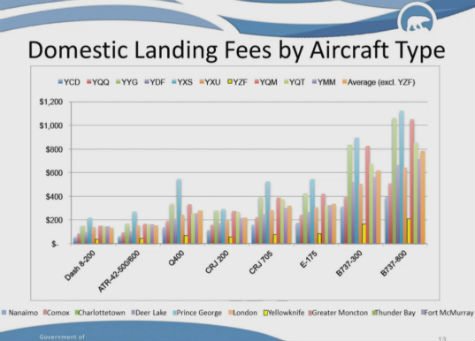
Currently, user fees and landing fees are much lower at the Yellowknife Airport than they are elsewhere in Canada.
To bring those fees in line with those at other airports, the department of transportation is proposing an additional $20 fee for anyone flying out of the territory.
At the same time, passengers travelling out of the airport but within the NWT would be required to pay $10 as early as next spring.
Airlines would also incur more costs through proposed increases to aeronautic and landing fees.
What has the department heard from stakeholders?
Neudorf says his department has been analyzing the financial state of the city’s airport for more than a decade now.
Since meeting with stakeholders, he says feedback has been generally positive and that there’s an appetite to make the Yellowknife Airport more of an economic driver.
During consultations, concerns that arose included a need for greater access, better deicing services and more of a business presence.
In the months to come, a committee involving numerous stakeholders will be struck to come up with a firm action plan for the airport and ways to manage it going forward.
A business plan will also be made public in the coming months.