


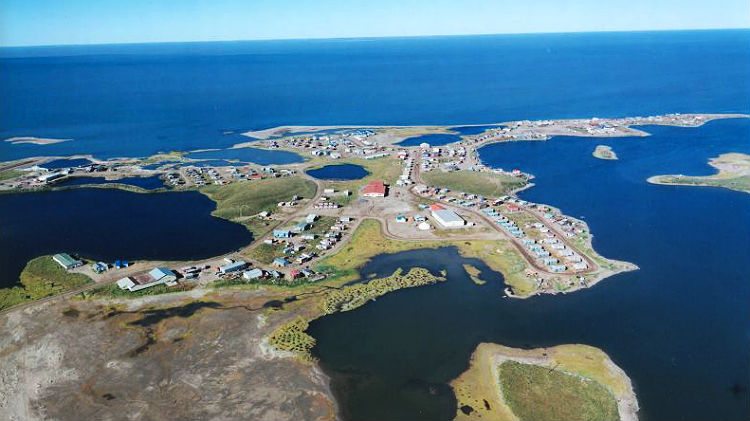

The Premier of the Northwest Territories has announced a year-long feasibility study into an “energy, transportation and communications corridor” running up the Mackenzie Valley to the Arctic Ocean.
Bob McLeod has been proposing an “Arctic Gateway” pipeline scheme for a number of years, and raised the idea with the Prime Minister in a meeting earlier this week.
In a speech in Ottawa on Thursday evening, McLeod said the new study would not specifically relate to his Arctic Gateway vision, but would “explore the feasibility” of a resource corridor from Alberta to the Arctic.
“Transportation routes in all forms and all directions are key to getting our resources to market,” he told his audience.
“We need more roads to resources – to all of our resources. That means considering all our options and looking for new, creative ideas.”
The announcement comes despite the current oil price crash.
McLeod believes protests against southern pipeline plans may force the industry to head north from the oil sands – to the NWT’s benefit once the market rebounds.
Read: Decision on NWT’s $1bn borrowing increase ‘imminent’
Full text: Bob McLeod’s speech announcing new study
“We have stranded resources and we see what’s happening in other jurisdictions, where it’s very difficult to get these pipeline projects approved,” McLeod told the Canadian Press.
“We think that by taking this approach we will be able to take advantage when oil and gas does recover.”
In a news release, the Government of the Northwest Territories said Aboriginal governments would be invited to take part in the study.
“We are proposing a thorough review of the issues, opportunities and challenges that might be associated with developing a corridor along the Mackenzie Valley,” added McLeod in that release.
“Our plan is to produce a comprehensive report to serve as an information resource to governments, industry and regulators as projects are planned, reviewed and delivered.
“Continued investment in northern transportation, energy and communications infrastructure is in the national interest, and the Northwest Territories is willing to step forward as a full partner with creative and collaborative solutions that can benefit the entire country.”
The territorial government is also considering whether to turn 150km of ice road north of Yellowknife into an all-weather surface, to the benefit of diamond mines in the area.
“Not only would it provide for more certainty with resupply, it would also facilitate development of other mineral properties in the Slave Geologic Province,” McLeod told the CBC.
A road of that nature could stretch as far as Nunavut.






