
The territorial government announced full funding for the rollout of junior kindergarten across the NWT as well as money for the implementation of a 911 service in its 2017-2018 budget.
Northwest Territories Finance Minister Robert C. McLeod tabled his second budget in the legislature Wednesday afternoon.
RELATED: Fully fund junior kindergarten in the NWT, says school board
RELATED: Yellowknife MLA: GNWT ‘delaying progress’ by not rolling out 911
Leading up to Wednesday’s presentation, some regular MLAs said they wouldn’t support a budget if it didn’t include full funding for junior kindergarten.
Altogether, the 2017-2018 budget seeks to eliminate 65 positions, though about 29 of those aren’t currently staffed.
McLeod also confirmed three department mergers.
The Department of Public Works and Services will merge with the Department of Transportation to form a single Department of Infrastructure.
Meanwhile, Finance will merge with Human Resources and the Executive will merge with Aboriginal Affairs and Intergovernmental Relations.
When all is said and done, the budget projects operating expenditures of $1.66 billion and revenues of $1.86 billion (roughly 66 per cent of all revenues come from federal transfers).
It’s also forecasting an operating surplus of $167 million and $55 million in new investments.
“We intend to ensure fiscal sustainability over the life of this assembly so that we can protect delivery of our core programs and services for our residents and still make investments in the priorities of this assembly,” said McLeod.
“We are cautiously optimistic that we have turned the corner on our way to restoring fiscal sustainability.”
Highlights from the budget include:
- $1.5 million for junior kindergarten in 2017-18 and a commitment of an additional $2.7 million to fully fund junior kindergarten during the life of the 18th Legislative Assembly
- $616,000 to implement a territory-wide 911 service (hopefully in the next 14 months, location of call centre unknown)
- $3 million in additional support for employment in small NWT communities
- $14 million for the operating costs of the Mackenzie Valley fibre line project
- $750,000 for actions to address homelessness in Yellowknife (including $230,000 to keep the day shelter open 12 hours a day and $520,000 for a sobering centre)
- $6.4 million to address cost pressures in the medical travel budget
- $500,000 to help Hay River and Fort Smith host the 2018 Arctic Winter Games
Government sets new expenditure reduction target
Altogether, 36 people will receive notice of potential impacts with the 2017-2018 budget. The GNWT remains committed however, “to retaining as many of these employees as possible.”
Even though 124 positions were eliminated with last year’s budget, approximately 53 of those positions were already empty and only nine employees were ultimately laid off.
The government is also scaling back its original goal of saving $150 million to $100 million over the life of this assembly.
Last year, the GNWT outlined a plan to generate the money over five years through a combination of cost cutting and new revenues.
By the end of this year, finance officials reckon $70 million in revenue initiatives and expenditure reductions will have been implemented.
NWT unions oppose ‘austerity’ budget
Two NWT unions expressed disappointment with the budget once it was released, calling it an austerity measure that regular MLAs should vote down.
The Public Service Alliance of Canada (PSAC) North accused cabinet ministers of ignoring their constituents in a stern release issued Thursday.
“At a time when stimulus is needed to reinvigorate the economy of the NWT, cabinet has put forward a budget that slashes services to residents and shrinks the size of government departments,” the statement read.
Jack Bourassa, regional executive vice-president of PSAC North, says job losses will result in people leaving the territory.
“Job cuts mean we have families that are packing up and moving out of the territory, and that causes a major loss in revenue entering the NWT,” he said.
Todd Parsons, president of the Union of Northern Workers, says it’s time for the government to start prioritizing quality jobs over infrastructure projects.
“The GNWT is moving in the wrong direction as they prioritize road and bridge projects over securing the livelihoods of Northern workers,” he said.
“Further cuts will leave workers uncertain and the North a less attractive place for newcomers.”
Both unions are strongly encouraging the territory’s regular MLAs to vote against the proposed budget.
What happens now?
All proposals contained in the 2017-2018 budget will be debated by MLAs over the course of the next six weeks.
In order for it to be approved, a majority of MLAs will have to vote in favour of it.
Earlier this week, a committee of regular members identified a number of priority areas while calling for a balanced yet responsible budget.
Priorities identified included job creation, more home care for seniors and measures to reduce poverty.
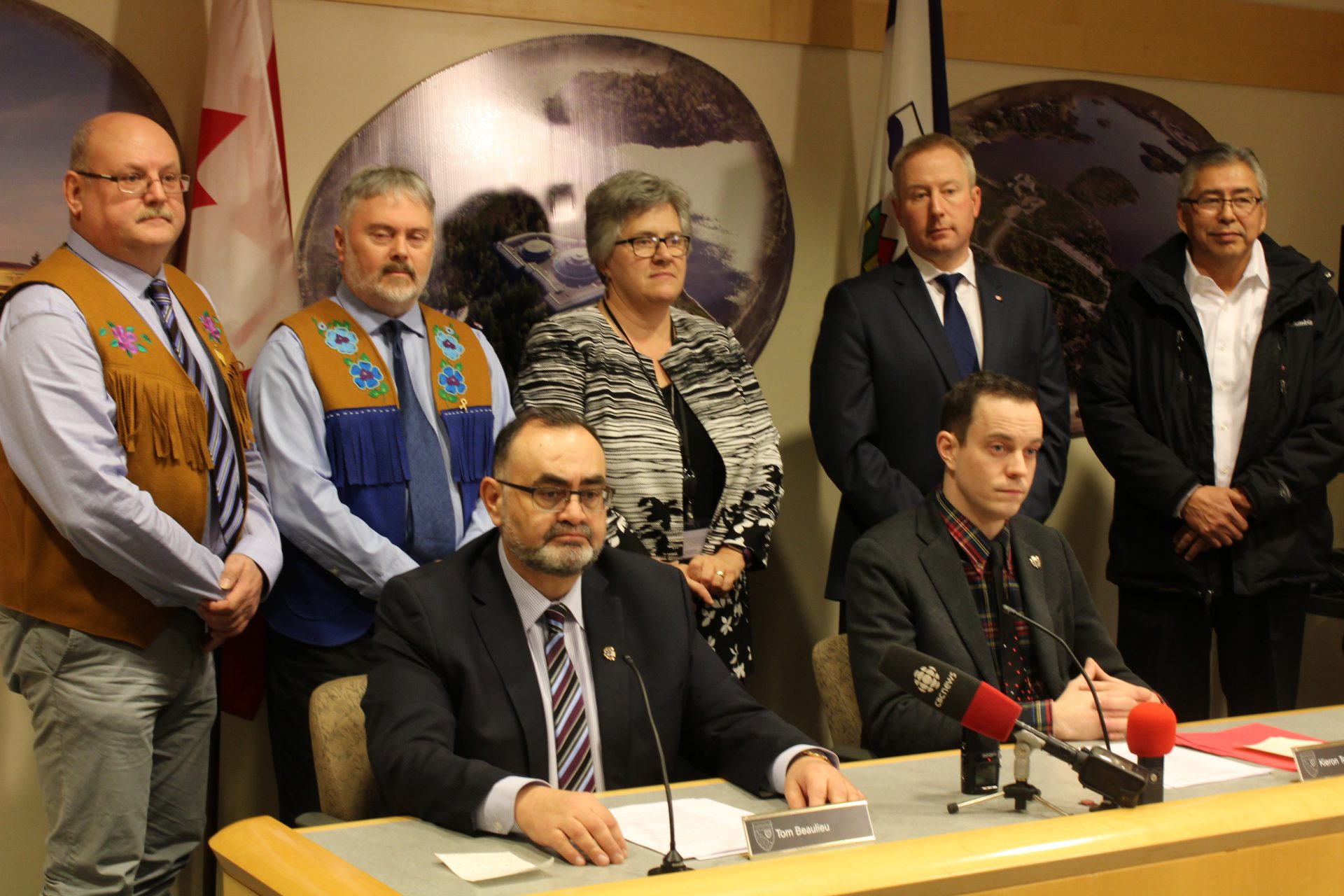
Tu Nedhé-Wiilideh MLA Tom Beaulieu, chair of the Standing Committee on Priorities and Planning, is concerned that the budget doesn’t address some of the government’s mandates.
“The current budget is more about cuts and is not focused on the mandates of the 18th Assembly,” he said. “Our proposals are based on what we are hearing from the people and businesses across the NWT.”
You can see the full budget here (pdf).
Last night I heard loud and clear from parents and I will not support a budget that doesn't fully fund #JuniorKindergarten #nwtpoli https://t.co/QtAN0qbdPE
— Kieron Testart (@KieronTestart) January 24, 2017