
Hay River’s fishing industry isn’t what it used to be, but a new revitalization project is hoping to bring it back to its glory days.
NEW: Indigenous interests ‘neglected’ in new GNWT fisheries project
RELATED: Hay River fishing: two fined for illegal harvesting
The GNWT committed $1.4 million as part of a five-year plan to revitalize the territory’s commercial fishing sector in Hay River Monday morning.
The Strategy for Revitalizing the Great Slave Lake Commercial Fishery aims to increase production and fish processing in the community, along with increase domestic and export market sales by 2021.
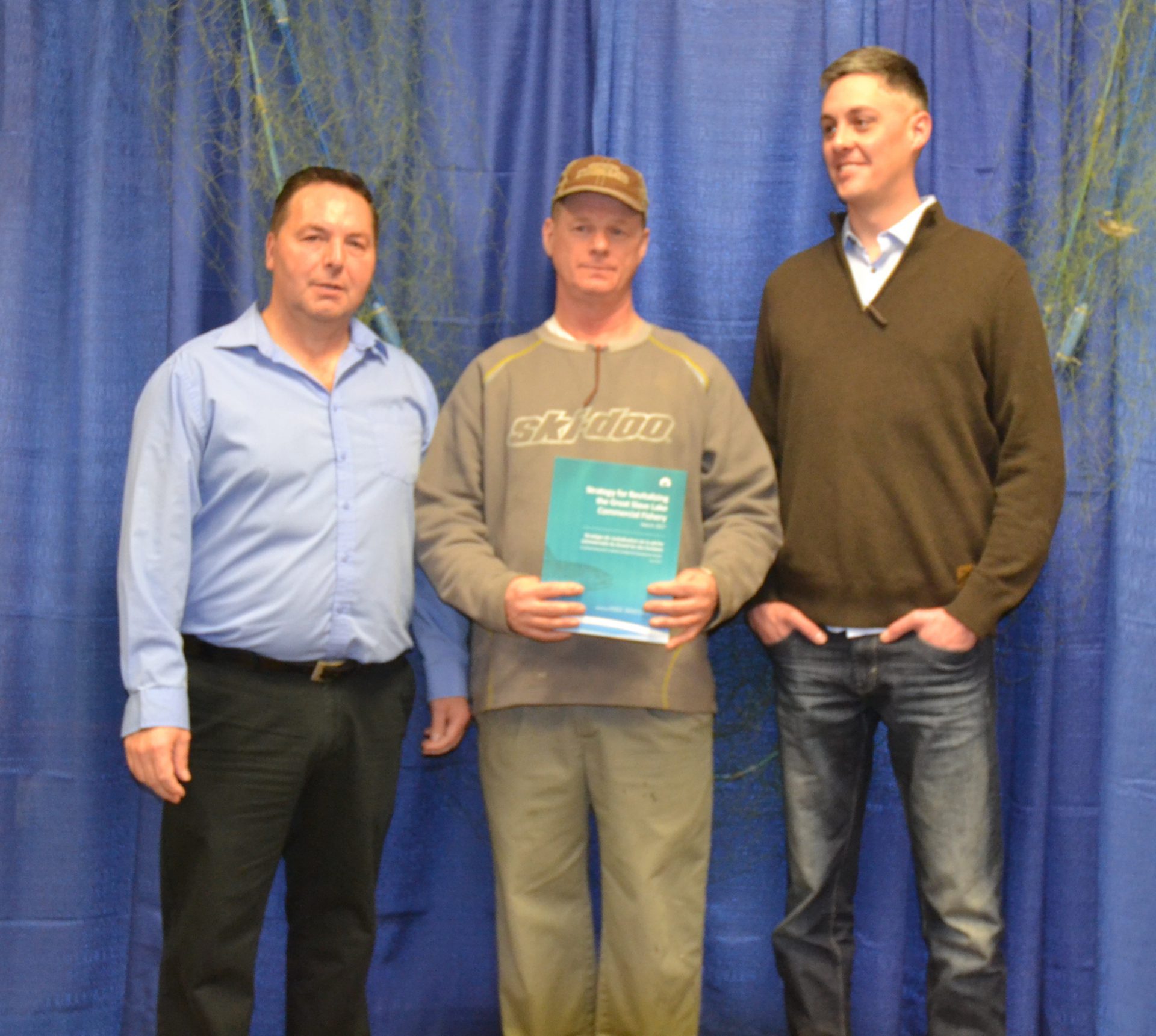
“[The revitalization] means a lot to Hay River,” said Industry, Tourism and Investment Minister Wally Schumann.
“Hay River has been the core area of the commercial fishing industry since the 1940’s. It’s a big part of our community, it’s probably one of the main reasons how the community came into existence, and it’s declined.
“I’ve been living in Hay River for 32 years and I’ve seen the number of participants drop off, and that quota’s dropping off, and this was something that needed to be done to bring us back to life.”
Commercial fishing began on Great Slave Lake in 1947.
At its height, Hay River was producing 1.3 million kilograms of fish a year. Last year it produced around 400,000 kilograms, something Schumann called ‘a very good year’.
“The production numbers have dropped off over the years,” Schumann said.
“The way of doing business has changed, the fishermen needed some assistance. It’s not the same as when they were fishing in the 1970’s and 1960’s.”
With the revitalization, the project hopes to keep jobs and training in Hay River.
Many of the community’s fishermen are older gentlemen, Schumann says, and the GNWT is looking at ways to get younger people into the sector.
If successful, the strategy believes it will lead to an annual benefit of over $6 million to the NWT economy coming out of Hay River alone.
The project has seven focus areas to move the industry forward, including looking at how to add value to the NWT economy, restarting the winter fishery and encouraging new entrants to the Great Slave Lake fishery.
The GNWT is currently looking at what it needs to do to help the industry, be it through investing in a new fish plant, creating different types of zones on lakes or gaining access to export markets.
“There’s a huge opportunity and we’re not utilizing the fish that’s in the lake,” said Schumann. “We need to figure that out, and that’s what this plan’s about.”
NEW: Indigenous interests ‘neglected’ in new GNWT fisheries project