A forthcoming documentary seeks to bring closure to the disappearance and death of Japanese tourist Atsumi Yoshikubo two years ago.
The 45-year-old doctor came to Yellowknife alone in October of 2014. But when she failed to check out of her hotel room and catch her flight home, police initiated a missing person investigation.

A massive, city-wide search involving police and civilians ensued but it was ultimately to no avail.
Mere days later, RCMP informed the media that Yoshikubo came to the Northwest Territories with a plan to go missing and that she was presumed dead.
Almost a year after her disappearance, a hiker came across personal belongings and bone fragments that were later confirmed to be hers.
Her disappearance and death caught the attention of people well beyond the boundaries of Yellowknife.
Why would a respected doctor – someone who was described as warm and loving by those closest to her – visit the territory with the intention of going missing?
Toronto-based filmmaker Geoff Morrison of Big Cedar Films tries to answer that question in his upcoming documentary The Missing Tourist.
‘It’s very difficult to find closure’
Morrison says he first took interest in Yoshikubo when word of her disappearance broke on Oct. 22, 2014.
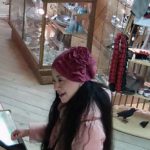
The Japanese tourist was last seen visiting a local shop before she walked up Highway 4 out of town.
When police suddenly called off their search for her, Morrison knew there was more to the story.
“Part of it seemed like a real tragedy that was suddenly being kind of silenced. It was also a really compelling story that didn’t really have much closure to it,” he said.
“Because there wasn’t a lot of information coming from the RCMP … I think it made it really hard to process this, particularly after the search was called off and in a manner that was very unusual.
“I just thought it’d be interesting to dig a little bit deeper and see if we could kind of bring some more context to the story.”
Morrison shot The Missing Tourist in Yellowknife, Tokyo and Kumamoto over a period of several months in 2016.
In that time, he spoke with those who were closest to the story, including journalists, police, the territory’s chief coroner and people who knew Yoshikubo back in Japan.
“When I learned about this story and learned that there might be more to it than what I was reading in the media, I really relished the opportunity to try and explore that,” he told Moose FM.
“I want the viewer to have the experience of watching this story unfold as if they were there in Yellowknife in 2014.”
‘Everyone had very fond memories’
Like many people who followed Yoshikubo’s story, Morrison only knew her as a tourist who came to Yellowknife and went missing.
That’s why he sought to learn more about her life prior to her trip.

“Without knowing all the information, without knowing exactly what happened to her, it’s very difficult to find closure,” he said.
Morrison says it was a ‘surreal’ experience talking to people who knew Yoshikubo in Japan.
After visiting Tokyo, where Yoshikubo worked as a doctor, Morrison traveled to Kumamoto where he met her brother and other people who grew up with her.
“In the end, there’s no doubt that this was an absolute tragedy, but speaking with people I think was also in some ways therapeutic,” said Morrison.
It soon became apparent to Morrison that life was much more difficult for Yoshikubo in Tokyo than it was in Kumamoto.
But even still, she was described as a warm and loving person who cared deeply about her patients.
“Everyone had very fond memories,” said Morrison, adding that he traveled to Japan to cement the background of her story.
Documentary premieres Thursday
Morrison says working on The Missing Tourist was difficult given the sensitivity of the subject.
An award-winning producer, writer and director, much of his previous work has focused on nature and arts projects across the country.
The Missing Tourist will premiere on CBC at 9:30 p.m. MT on Mar. 2.
You can watch a trailer for the 44-minute documentary here.
https://www.facebook.com/MissingTouristDoc/videos/10155015955516950/