



‘It’s not slowing down’ says Yk fire chief of false alarms

With 34 false fire alarms in January alone, Yellowknife’s fire chief John Fredericks says the issue is not going away anytime soon and it’s costing the department both money and resources.

“It’s getting tougher and it’s more on the weekends. We look for patterns, so we try to not schedule other things when we know that Friday, Saturday nights are alarm nights,” he says.

Fredericks says 2017 was a pretty good year, only 143 false alarm calls came to the department. Last year, 258 calls came in. Of those, 78 per cent were deemed malicious, meaning someone pulled an alarm, damaged something which set the alarm off, opened a fire door, or something similar. The first month of 2019 wasn’t any better: 34 false alarm calls came to the fire division, of which 60 per cent were malicious.

And while the opening of the sobering centre and the start of an outreach van service have reduced the number of ambulance calls, Fredericks says the issue of false alarms is replacing this as a costly and time-consuming one for the department.

READ MORE: JOINT SOBERING CENTRE AND DAY SHELTER OFFICIALLY OPENS DOWNTOWN

When a fire alarm call comes in, four to six members are sent together with a fire truck and an ambulance. With five to eight members at the fire hall on any given day, this means most of the time all staff members are going to the call.

“We don’t get it as a false alarm, we get it as an alarm in a building. So we have to respond as it is a working fire,” Fredericks says. This involves around an hour on scene, and half an hour for a member to write a report after the incident. Fredericks estimates it costs around $1,400 to send the fire truck and ambulance.
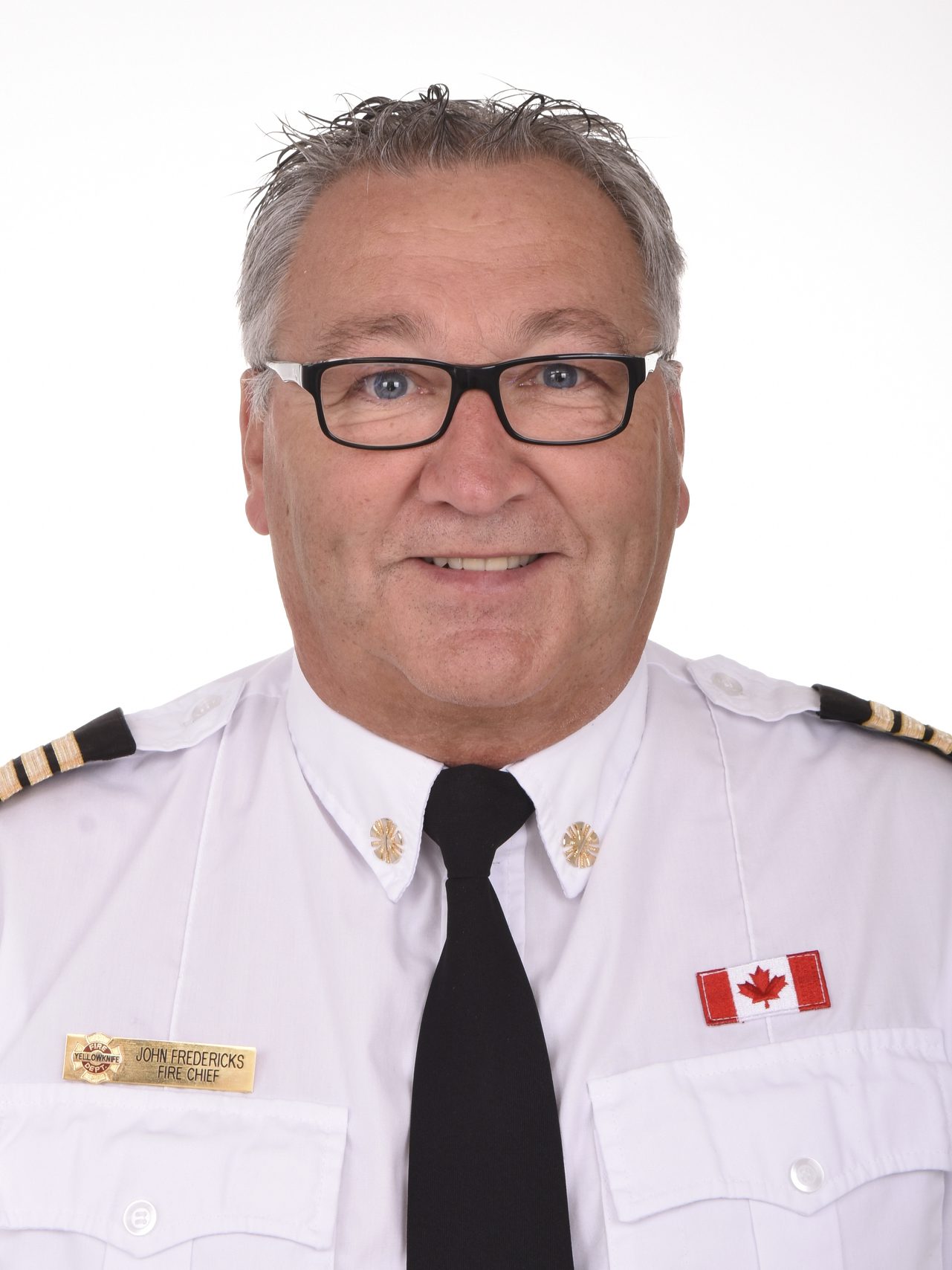
Yellowknife Fire Division Chief John Fredericks. Submitted photo

It can also slow response times for other emergencies, which Fredericks says happens during around five per cent of calls. “We’d be fully dressed, doing our job as a firefighter on a building then we’d get a medical call. So those two attendants have to take off their gear, jump in the ambulance and go to the call. So it slows down our response.”

Fire department members don’t only respond to fires, they also have training, fire inspections, pre-planning for how to respond to fires at certain buildings. All of this gets shelved when calls come in.

The department is now working with property owners on prevention. Deputy fire chief Gerda Groothuizen says some ideas include electronic cover plates over pull stations, cameras and having RCMP investigate and lay charges.

READ MORE: POLICE TO WORK WITH BUILDING OWNERS ON FALSE ALARMS

“We have our fire prevention person, talking to property owners to try to give them ideas of how we can cut down these because right now, they’re not manageable. When you have 258 (in 2018), we’ve had 34 in the month of January so it’s not slowing down,” Fredericks says.


Emelie Peacock
Emelie Peacock
News Reporter

Continue Reading

You may also like


cjcd Now playing play

- Advertisement -

Related Articles

- Advertisement -

Latest News

Dene National Assembly in Łı́ı́dlı̨ı̨ Kų́ę́ going ahead in September after wildfires

The 56th Dene National Assembly is being postponed in support of the Łı́ı́dlı̨ı̨ Kų́ę́ First Nation who are experiencing devastating impacts from wildfires and evacuations since late June. In an announcement issued Friday morning, Dene National Chief George Mackenzie said the assembly is being rescheduled for Sept. 22 to 24 but will still take place in the community of Łı́ı́dlı̨ı̨ Kų́ę́ (Ft. Simpson), in Treaty 11 Territory.

Dene National Chief calls for Indigenous voices and equity in major projects

Dene National Chief George Mackenzie is calling for greater inclusion of Indigenous voices in decision making around major projects in the territory. The Dene National Chief also called for Indigenous equity ownership and revenue-sharing to be made a standard requirement in major projects. The chief added that projects like the Mackenzie Valley Highway, when “built in genuine partnership with Dene communities,” have found success because they were co-created with the communities’ support

Liidlii Kue Chief advises still unsafe to return following Thursday’s rains

Liidlii Kue Chief Kele Antoine says that it may be about another week before the evacuation order can be lifted and community members can return. The chief said that following about 30 millimetres of rain on Thursday, crews are continuing to action hotspots and active fire areas of FS016 including the Wildrose area.

Doors of over 25 new homes open in West Point and Łutsël K’é

West Point and Łutsël K'é have opened the doors of 26 new homes built through two community-led housing projects. The two housing projects were led by Indigenous governments to address locally identified housing priorities. "Indigenous governments are taking the lead in addressing our housing challenges, and I am encouraged to see Housing NWT working alongside the Lutselk'e Dene First Nation to get these homes to the families who need them," said MLA Richard Edjericon.

N.W.T. community ‘makes hay’ with over 21,000 “participACTIONs” in June

Hundreds of community members engaged in over 21,000 “participACTIONs” in Hay River in June. The community was selected as one of 40 finalists from more than 375 across the country in 2026's ParticipACTION Community Challenge. “Community members participated in events ranging from fitness classes to sports programming to family community events such as the Family Party in the Park, Cardboard Boat Races and Asphalt Art," said Courtney Fraser, Hay River's Recreation Programming Supervisor


