
Despite plans to cut spending in its draft 2021 budget, the city has set aside a large amount for removing sludge from the city’s wastewater lagoon.
While spending for capital projects — money spent on things like infrastructure projects — is set to reduce significantly from last year, at $15.8 million compared to $24.2 million in 2019, the city is planning to spend $1.8 million on removing sludge from the Fiddlers Lake sewer lagoon.
It is the biggest expense in the city’s capital project budget, aside from regular spending on sewage and water infrastructure and road paving services.
The project will cost $7.4 million in total, with $5.6 million coming from the federal government and will take between 3 and four years, according to Chris Greencorn, director of Public Works and Engineering with the City of Yellowknife.
Clearing the lagoon is part of the city’s sludge management, which is required for the city’s water license, added Greencorn.
‘“It’s not the fun projects people necessarily want to support, but definitely the necessary ones and when it breaks, nobody wants that,” said Mayor Rebecca Alty in the budget committee meeting on Monday.
The project will remove the sludge from the bottom of the lagoon and increase the capacity of the lagoon, which currently acts as a form of storage depot for wastewater and sewage coming from Yellowknife.
The current lagoon was constructed in 1981 and raised to its current elevation in 1987. Sewage treatment is accomplished naturally in the lagoon itself by allowing sewage waste — or effluent — to pass through it and several marshlands before reaching Great Slave Lake.
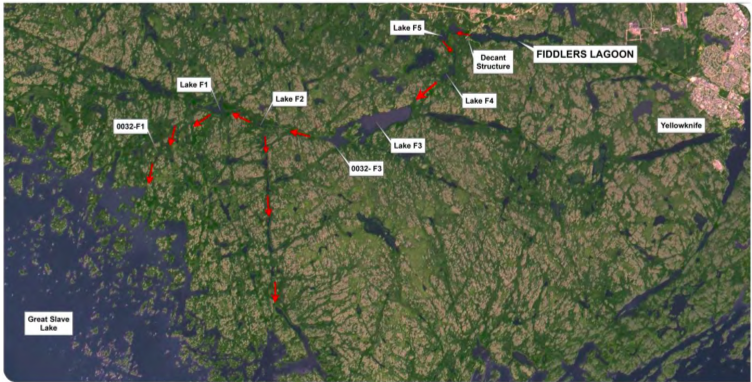
This passage of the waste through the lagoon and marshlands allows it to be filtered by sediments, before it reaches the Great Slave Lake. This process begins in early September and lasts for around 12 weeks, ending in November.
“If you flush the toilet, you ought to make sure that it’s going somewhere and being handled properly,” said Alty in an interview with MyYellowknifeNow.com.
The lagoon holds the waste for the rest of the year, causing sludge to accumulate.
Removing it increases the capacity of the lagoon to store waste during its nine-month period and will improve the quality of the wastewater as it travels through the different treatment points and ultimately into Great Slave Lake, according to Greencorn.
“It’s our intention to make sure the lagoon is working as optimally as possible, so the downstream effects are minimal,” said Greencorn.
Draining the sludge will also increase the longevity of the lagoon.
Planning for the layover area where sludge will be placed and properly disposed of is ongoing, added Greencorn. When it’s completed, the sludge removal can begin.