
While some may have rejoiced at the news unlimited internet plans were coming to the Northwest Territories, Crystal McDonald did not.
McDonald — who is Tetlit Gwich’in and enrolled in the office administration program — is attending her classes at Aurora College, predominantly over Zoom and Google Teams.
This means her monthly data usage is increasing dramatically.

will become unaffordable if her data usage
keeps increasing. Photo supplied.
Aurora College has offered additional grants for technology needs and to help offset the internet costs that includes a one time payment of $750 and another payment for an additional $100 per month.
“The grants do help but it’s too early for me to tell what my usage and coverage costs may end up,” she said in an email.
Aurora College has also offered full refunds for students who are dissatisfied with their online learning experience.
“We are confident that our efforts to deliver our programs by distance and the support we are offering will speak for themselves with our students,” Aurora College president Andy Bevan said in an email.
In the meantime, McDonald said she is worried that the internet costs may continue to increase. Unable to return to her job at the school library and the only one paying her bills, McDonald is left hoping she doesn’t go over her data limit.
She is currently paying $63 for Northwestel’s pulse 10 plan.
Fort Smith is one of the communities that will have unlimited internet plans available as of November 2. But the proposed prices — released by Northwestel last Wednesday — are too expensive for McDonald.
Ensuring an affordable and reliable access to education for Indigenous people across Canada has been a challenge during the pandemic, according to federal Indigenous Services Minister Marc Miller.
“One of the challenges of our government in the past few years has been to really close that education gap, we have been able to do so on a financial basis,” Miller said in an interview with Vista Radio. “But there’s much more work to be done in ensuring that the resources are there.”
The federal government announced $112 million in funding to help ensure a safe return to school for Indigenous people on reserves.
“We recognize that a safe and physically-distanced return to school may incur additional costs and are committed to keeping communities safe,” he said in a statement when the funding was announced.
Miller added there are concerns on how a lack of proper access to the technology required for online, distance learning could impact graduation rates for Indigenous students.
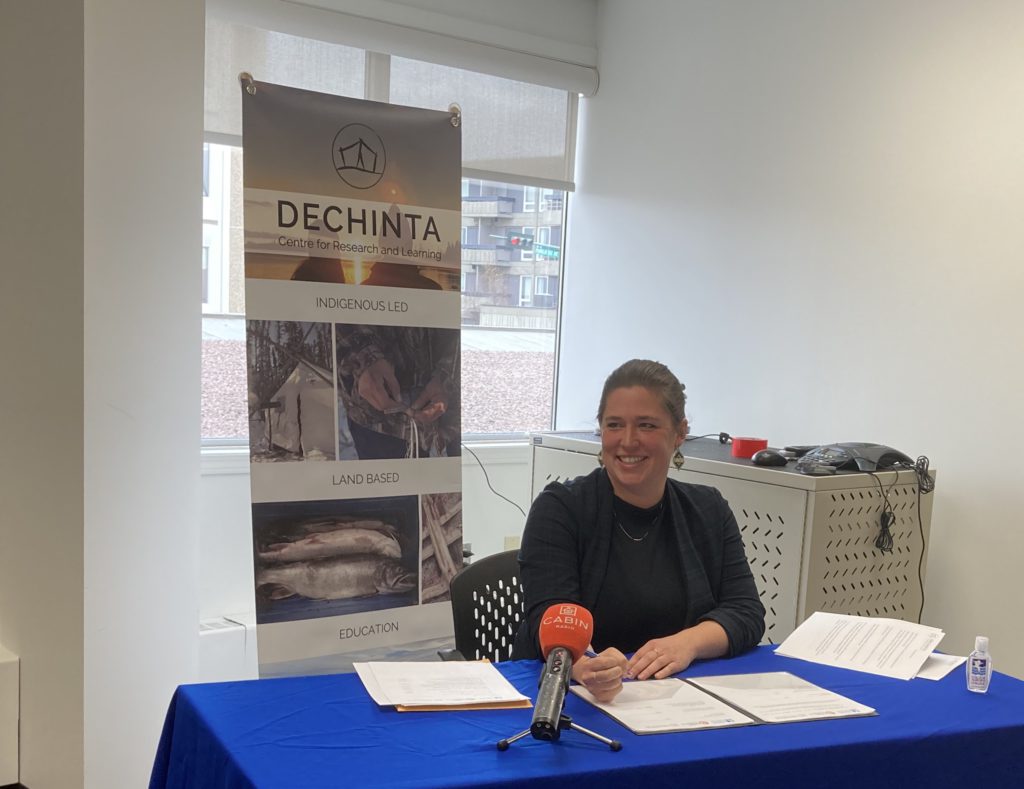
Kelsey Wrightson, the executive director of the Dechinta Centre for Research and Learning, said the school has been working closely with students to make sure they have proper access to their online resources.
The school, which usually focuses on land-based learning, introduced four weeks of online course work to supplement the on the land learning experience, for their fall semester.
Wrightson said she checked with each student – this semester they had a cohort of eight, slightly smaller than usual – that they were able to access the online course work. If all the students hadn’t been, Wrightson said, they would have adapted the programming.
The online education has been well received by students, and going online has allowed students to hear from some speakers and authors who they otherwise wouldn’t have been able to meet.
In other communities, like Ross River in Yukon, where there are more barriers to accessing technology, Wrightson said Dechinta emphasizes the learning opportunities the land can offer.
“Rather than trying to supply some of the communities that have really limited connectivity, or who are facing a lot of barriers to accessing online resources, we try to work with the strengths that those communities have,” she said.
Moving forward, Wrightson said Dechinta is working with local communities to build their capacity to host their own learning programs on the land.
“You’re often going to have students that are facing a lot of structural and systemic barriers to access in post secondary,” said Wrightson.
“So all institutions, no matter the size of their cohorts, are thinking really hard about how to adapt their programming to make sure that they’re not losing anyone in this process.”
With files by Brendan Pawliw.