



100.1 GO FM - We're Your Feel Good Pop Station

Arsenic testing of Yellowknife waters to last through 2020

Yellowknife and the Government of the Northwest Territories are preparing for a long period of arsenic testing.

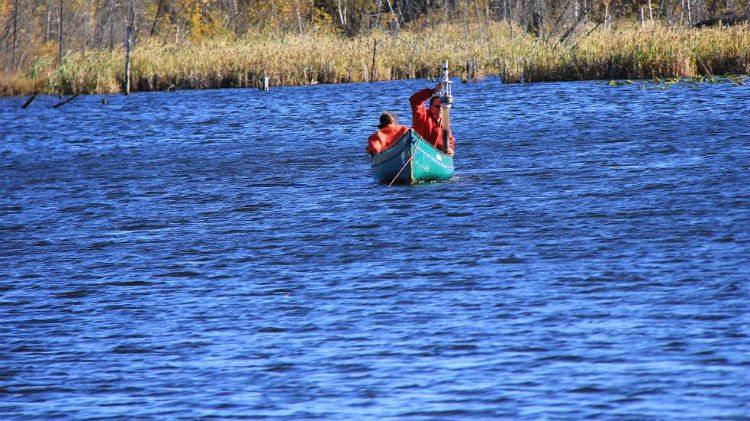
The Department of Environment and Natural Resources will be, in collaboration with Universities, monitoring to see if arsenic is in the water, sediments, soils, and fish in the Yellowknife region.

“We’re hoping that we don’t find anything, we’re just monitoring the arsenic levels in the water to make sure that they’re not as high as people think.”

Environment Minister, Robert C. McLeod, says the testing being done is to reassure the public that the waters are safe.

We’re continuing to work on the water sampling; we’re continuing to work with health and social services on the water samples that we take. We’re hoping that we don’t find anything, we’re just monitoring the arsenic levels in the water to make sure that they’re not as high as people think.

This summer, Queen’s University out of Ontario, will be sampling the soil. That study is expected to finish by 2018.

Carleton University (Ontario) will be inspecting the effect on fish and the general status of the fish in the lakes surrounding Yellowknife. McLeod says that study is expected to finish by 2020.

The Universities that are helping in this cause are in addition to the work by E&R,” says McLeod. “I believe Miramar is also assisting in the sampling as well, so it’s a collective effort.

The research will be posted to the GNWT Environment and Natural Resources website when completed.

For more information, you can click here to read about the arsenic levels in lakes. (April, 2017)



 

Cameron Wilkinson
Cameron Wilkinson
News Reporter

Continue Reading

You may also like


cjcd Now playing play

- Advertisement -

Related Articles

- Advertisement -

Latest News

Alternatives North suspects regulatory capture in ITI

Alternatives North believe they have uncovered evidence of the ‘regulatory capture’ of the GNWT Department of Industry Trade and Investment (ITI) by the mining industry, specifically regarding the regulatory policies surrounding the Mineral Resources Act. 

Relentless Indigenous Woman talks languages, “literally” changing world

Dr. Candace Manitopyes, aka The Relentless Indigenous Woman, is working with Elders and Language Keepers in the North and across Turtle Island on relaunching an Indigenous languages program. Dr. Manitopyes says there is an urgency to support Indigenous language learning, especially for Northern First Nations communities, where culturally responsive community rooted resources are even more scarce.

New generation of Indigenous languages speakers celebrated in the NWT

“The language is who we are. Language is our Elders. Language is what makes us who we are,” said Paul Andrew, who emceed a special gathering in Yellowknife that included mentors and apprentice Indigenous language learners, their families, organizers and community leaders. This year’s cohort engaged in learned the languages of Gwich’in, Tłı̨chǫ, Inuvialuktun, Inuinnaqtun, Inuktitut,Dene Kede, Dene Zhatıé, Nêhiyawêwin, Dëne Sųłıné and Wı̀ılı̀ıdeh. 

NWT services to be made accessible in Indigenous languages, says GNWT

The territorial government will soon begin offering all services in each of the 11 official languages including the nine Indigenous languages of Dinjii Zhu Ginjik (Gwich’in), ᐃᓄᒃᑎᑐᑦ (Inuktitut), Inuvialuktun, Inuinnaqtun, Dene Kǝdǝ́/ Sahtúot'ı̨nę Yatı̨ (North Slavey), Dene Zhatıé (South Slavey), Tłı̨chǫ, Dëne Sųłıné (Chipewyan) and Nëhiyawëwin (Cree). Previously, the services had been available in English and French only.

Support and funding for “Language Cafes” to launch this spring

The NWT Literacy Council has started a new funding program to help support Indigenous language revitalization. Kathryn Barry Paddock, Executive Director of the NWT Literacy Council made the announcement that the organization is promoting more funding and the creation of more accessible spaces for Indigenous language through "Language Cafe" events.

