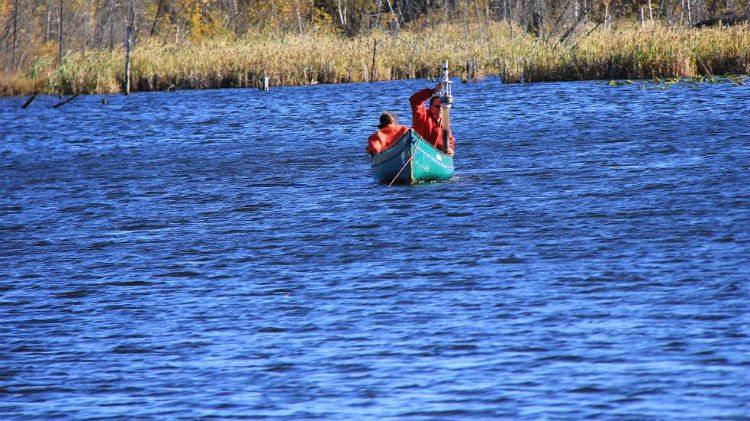

Yellowknife and the Government of the Northwest Territories are preparing for a long period of arsenic testing.
The Department of Environment and Natural Resources will be, in collaboration with Universities, monitoring to see if arsenic is in the water, sediments, soils, and fish in the Yellowknife region.
“We’re hoping that we don’t find anything, we’re just monitoring the arsenic levels in the water to make sure that they’re not as high as people think.”
Environment Minister, Robert C. McLeod, says the testing being done is to reassure the public that the waters are safe.
“We’re continuing to work on the water sampling; we’re continuing to work with health and social services on the water samples that we take. We’re hoping that we don’t find anything, we’re just monitoring the arsenic levels in the water to make sure that they’re not as high as people think.”
- MLA ‘DISAPPOINTED’ KAM LAKE ARSENIC LEVELS ONLY NOW KNOWN
- GIANT MINE CLEANUP CONTINUES AS GNWT ANNOUNCES OFF SITE TESTING
This summer, Queen’s University out of Ontario, will be sampling the soil. That study is expected to finish by 2018.
Carleton University (Ontario) will be inspecting the effect on fish and the general status of the fish in the lakes surrounding Yellowknife. McLeod says that study is expected to finish by 2020.
“The Universities that are helping in this cause are in addition to the work by E&R,” says McLeod. “I believe Miramar is also assisting in the sampling as well, so it’s a collective effort.”
- NEW RESEARCH FINDS HIGH LEVELS OF ARSENIC IN YELLOWKNIFE LAKES
- NWT’S TOP DOCTOR ISSUES ARSENIC WARNING FOR YELLOWKNIFE LAKES
The research will be posted to the GNWT Environment and Natural Resources website when completed.
For more information, you can click here to read about the arsenic levels in lakes. (April, 2017)